Executive Summary: Scheduling professional tree trimming in Rockford IL during autumn eliminates hazardous branches before heavy winter snow and freezing ice arrive. Proactive pruning prevents roof punctures, power line interruptions, and costly structural property damage. Discover the warning signs, seasonal techniques, and local care strategies that keep Northern Illinois properties safe year-round.
Key Questions Answered:
- When is the best time for tree trimming in Rockford IL? Late summer into mid-autumn provides an ideal window to inspect visible foliage defects and remove weak limbs before heavy snow and freezing ice overload the canopy.
- Why is autumn branch pruning critical in Winnebago County? Removing deadwood and overextended limbs reduces mechanical wind resistance and prevents heavy ice accumulation from causing catastrophic canopy failure.
- When does a tree require complete removal instead of trimming? Trees with extensive trunk rot, hollow interior wood exceeding one-third of the circumference, or severe root plate failure require complete tree removal rather than maintenance pruning.
Key Takeaways for Property Owners
- Autumn structural pruning removes dead, diseased, and overextended branches before winter storms strike Northern Illinois.
- Clear canopy spacing reduces snow accumulation and wind resistance, protecting roofs, driveways, and overhead utility lines.
- Pairing seasonal trimming with professional assessment identifies root rot, trunk decay, and issues requiring tree removal or stump grinding.
The Hidden Hazards of Postponing Autumn Canopy Care
As summer winds down across northern Illinois, trees begin their transition toward winter dormancy. While vibrant autumn leaves create picturesque scenery throughout Winnebago County neighborhoods, the changing season brings unpredictable storms, biting winds, and early freezes.
Neglecting tree care during this seasonal shift leaves your property exposed to significant hazards. Deadwood hidden within lush summer foliage becomes brittle as temperatures drop. When early winter blizzards or freezing rain coat branches in thick ice, unpruned canopies carry thousands of pounds of added weight. A single cracked bough hanging over your roof, driveway, or power connection can snap without warning, causing extensive structural damage and sudden utility outages.
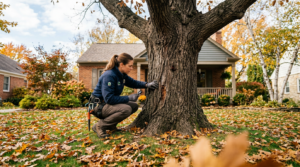
Taking action before winter sets in is essential for safety. Following recognized property safety guidelines, a thorough autumn tree inspection spots structural weaknesses while foliage patterns still reveal stressed or dying limbs.
The Rise of Proactive Tree Care Across Northern Illinois
Over past decades, homeowner approaches to tree management in Rockford IL have shifted dramatically. Property owners historically waited until a severe blizzard brought limbs down across roadways or utility lines before contacting tree specialists. This reactive approach regularly resulted in costly emergency calls, insurance claims, and preventable property loss.
Today, local residents recognize that preventative canopy maintenance is far safer and more cost-effective. Modern arboriculture focuses on preserving long-term tree vitality, balancing canopy weight distribution, and establishing clear safety buffers around residential structures. Proactive management safeguards your landscape investments while protecting homes from severe Midwestern seasonal shifts.
Precision Tree Trimming in Practice
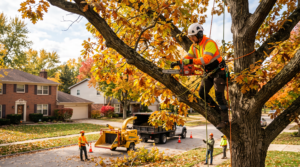
Professional tree maintenance requires specialized knowledge of branch biology, weight distribution, and proper cutting angles. Proper pruning involves methodical canopy thinning rather than arbitrary branch cutting.
1. Deadwood Removal and Crown Cleaning
The first priority in autumn pruning is the removal of dead, dying, or diseased wood. Deadwood harbors fungal pathogens and wood-boring insects. More importantly, brittle dead limbs snap easily under moderate wind gusts. Crown cleaning eliminates these hazard points, preventing decay from traveling into the parent trunk.
2. Structural Thinning and Weight Reduction
Dense canopies act like sails in high autumn winds, transferring immense rotational force to the trunk and root plate. Thinning interior branches allows wind to pass freely through the crown. Selectively reducing heavy, horizontal limbs prevents structural limb failure when freezing precipitation accumulates on the branch surface.
3. Clearance Pruning for Buildings and Utilities
Branches extending within ten feet of rooflines, chimneys, gutters, and siding present immediate risks. Strong gusts cause limbs to scrape against shingles, stripping protective granules and tearing gutters away from eaves. Autumn clearance pruning creates a safe physical buffer between tree crowns and your home.
4. Crown Raising for Access and Sightlines
Removing low-hanging branches around driveways, walkways, and street rights-of-way prevents delivery trucks and personal vehicles from catching overhead limbs. It also improves landscape visibility and ensures municipal compliance throughout Rockford neighborhoods.
Deciding Between Tree Trimming and Full Tree Removal
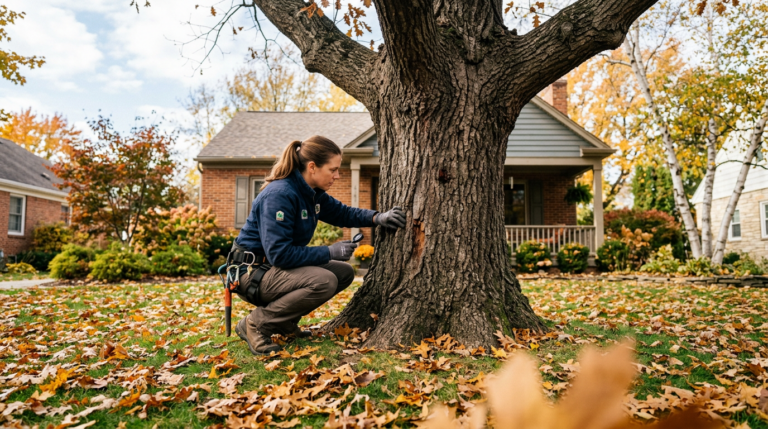
While precision trimming solves many structural concerns, certain defects compromise a tree beyond repair. During your seasonal inspection, evaluating overall health indicates whether corrective pruning or full tree removal is necessary.
| Condition / Symptom | Recommended Action | Primary Safety Goal |
|---|---|---|
| Isolated dead branches in outer canopy | Targeted Tree Trimming | Remove fall hazards while preserving healthy canopy structure |
| Canopy encroaching on roof or power lines | Clearance Pruning & Shaping | Establish a safe ten-foot buffer from physical structures |
| Deep vertical trunk cracks and hollow base | Complete Tree Removal | Eliminate imminent whole-tree collapse risks near buildings |
| Fungal conks at root flare and leaning trunk | Professional Removal & Assessment | Prevent catastrophic root plate failure during high winds |
| Old decaying stump attracting pests | Complete Stump Grinding | Eradicate insect colonies and restore usable lawn area |
When decay compromises the trunk or the root plate begins lifting, attempting to trim the tree offers false security. In these situations, safe removal prevents serious damage to nearby structures. Following removal, complete stump grinding eliminates subterranean nesting sites for wood-destroying carpenter ants and termites, clearing the area for future replanting.
Tailored Solutions for Winnebago County Properties
Every landscape in Rockford, Loves Park, and surrounding communities features unique combinations of tree species, property boundaries, and microclimates. Effective tree care requires tailored solutions designed around your specific property variables:
- Mature Hardwood Management (Oak, Maple, Hickory): Large shade trees require selective weight reduction on overextended limbs to maintain balanced center-of-gravity during heavy snowfalls.
- Fast-Growing Softwood Care (Silver Maple, Willow, Boxelder): These species develop weak, brittle branch unions susceptible to wind shear. Early corrective pruning establishes strong central leaders.
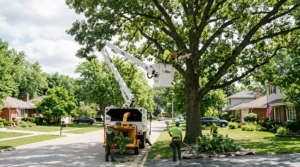
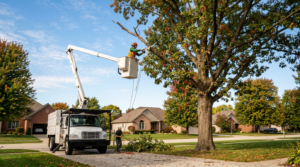
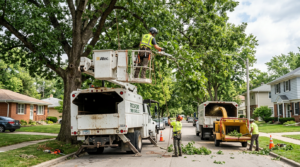
- Tight Urban and Suburban Lot Clearance: Compact residential properties require specialized rigging and bucket equipment to lower large limbs safely without touching fences, outbuildings, or neighboring yards.
- Commercial and Multi-Family Grounds: High-traffic commercial properties require regular liability audits and documented clearance trimming along parking areas and pedestrian walkways.
Why Choose Flying W Tree Service for Your Property
Safe and efficient tree care requires proven field experience, certified expertise, and heavy-duty machinery. Flying W Tree Service has served Rockford IL and surrounding communities since 1972, providing over 50 years of trusted, professional tree care.
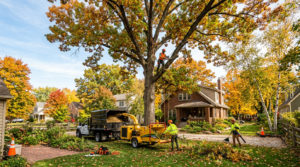
Our team brings the equipment necessary to manage any residential or commercial project safely, including 75-foot bucket trucks, high-capacity log loaders, and advanced stump grinders. Whether your property needs preventative crown shaping, large-scale tree removal, stump grinding, or rapid storm damage cleanup, our certified specialists deliver unmatched precision and thorough debris clearing after every job.
Protect Your Landscape and Home This Season
Preparing your trees for colder weather is one of the most effective steps you can take to safeguard your property value and family safety. Addressing weak limbs and overgrown canopies in autumn prevents costly emergency repairs once winter arrives.
Flying W Tree Service provides clear, honest assessments and detailed free estimates for homeowners across Rockford, IL. Reach out to Flying W Tree Service today to schedule your comprehensive autumn tree trimming assessment.
Frequently Asked Questions
Can trees be trimmed in the late autumn and early winter?
Yes. Late autumn and winter dormancy are excellent times for trimming most shade and ornamental trees. Without leaves, branch architecture is clearly visible, enabling precise structural cuts that heal quickly once spring growth resumes.
How far should tree branches be trimmed away from a roof?
Branches should maintain at least eight to ten feet of clearance from roofs and exterior walls. This prevents wind-whipped branches from damaging shingles and stops squirrels and raccoons from gaining easy access to your attic.
What should I do if a storm damages my trees before I can trim them?
If broken or hanging branches threaten your home, driveway, or power lines, stay clear of the drop zone and call a professional emergency tree service immediately. Avoid attempting to cut spring-loaded storm branches yourself.
How does stump grinding benefit my yard after a tree is removed?
Stump grinding grinds the remaining wood six to twelve inches below grade. This stops suckering growth, eliminates tripping hazards, prevents lawn mower blade damage, and prevents carpenter ants from colonizing your property.