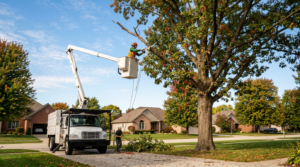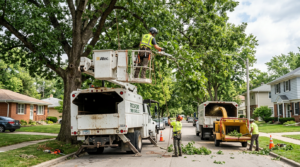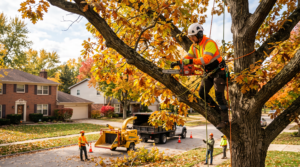
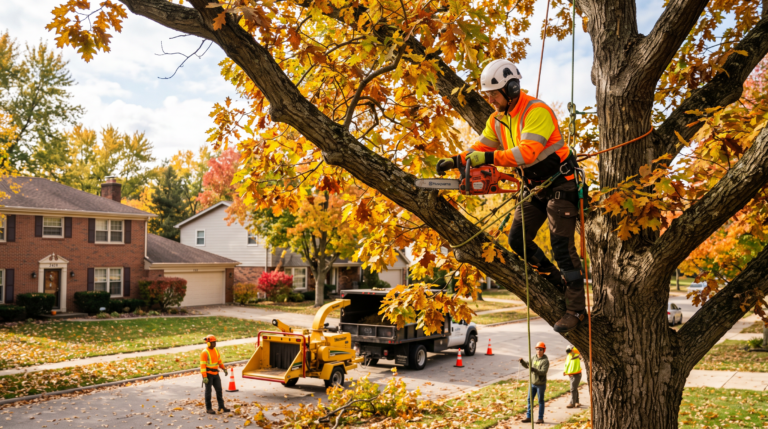
Autumn brings crisp air and brilliant foliage across Northern Illinois, but it also signals the most critical window of the year for structural tree care. Scheduling professional tree trimming in Rockford, IL before freezing temperatures arrive eliminates weak branches, balances heavy canopies, and protects your home against the destructive weight of snow and ice storms.
Executive Summary for Property Owners
Proactive autumn pruning prevents costly roof punctures and emergency utility outages by removing compromised wood before Midwest blizzards strike. Trimming during dormancy reduces fungal vulnerability and strengthens root systems for spring growth. Local homeowners in Rockford can preserve tree health and property value through targeted seasonal canopy management.
Key Takeaways for Homeowners
- Hazard Prevention: Removing dead, cracked, or crossing limbs eliminates major structural risks before winter wind and freezing rain exert extreme torque on branch unions.
- Biological Advantage: Late fall pruning limits sap loss and shields open cuts from aggressive summer insects and fungal pathogens while the tree enters seasonal dormancy.
- Cost Efficiency: Planned preventative maintenance costs significantly less than emergency storm damage cleanup, fallen limb removal, or structural roof repairs.
Key Questions Answered:
- What is structural tree trimming? Structural tree trimming is the selective removal of diseased, dead, or competing branches to improve canopy balance, reduce wind resistance, and extend the lifespan of mature shade trees.
- When is the best time for tree trimming in Rockford, IL? Late autumn through early winter provides an ideal pruning window because dormant trees experience minimal physiological stress and barren branches give arborists clear visibility of structural defects.
- How does winter weather damage unpruned trees? Accumulated ice can increase branch weight by up to thirty times, snapping compromised limbs and driving heavy wood onto roofs, driveways, and utility connections.
The Hidden Risks of Neglected Canopies in Northern Illinois
Every year, property owners across Winnebago County face severe property damage caused by falling tree limbs during early winter freezes and late-season windstorms. Mature hardwood trees like silver maples, green ashes, and red oaks develop extensive canopies that capture massive amounts of snow. When heavy precipitation adheres to weak limb unions, structural failure is often immediate and catastrophic.
Ignoring overextended limbs allows minor branch rot to spread inward toward the central trunk. During summer and early autumn, dense green foliage conceals internal decay, hollow cavities, and deadwood. Once the leaves drop, these structural hazards become glaringly exposed. If left unaddressed, the first major freezing rain event converts unchecked deadwood into dangerous projectiles hanging directly above your roof, vehicles, and walkways.
Beyond structural risks to buildings, untamed canopies that brush against power lines create hazardous fire conditions and cause localized electrical outages during winter gales. Routine clearance pruning keeps limbs at a safe distance from municipal utility corridors and ensures that overhead service drops to your home remain completely uncompromised.
The Rise of Preventative Urban Tree Canopy Management
Over the past several decades, municipal forestry departments and residential property managers have shifted from reactive disaster response to predictive, preventative canopy management. Decades ago, tree care often meant calling a crew only after a massive limb had crushed a fence or blocked a roadway. Modern arboriculture emphasizes continuous canopy stewardship to stop catastrophic failures before they happen.
Urban microclimates present unique environmental stressors for neighborhood trees. Compacted soil, street salt runoff, restricted root zones, and mechanical root damage all weaken a tree’s natural resilience. Preventative pruning mitigates these challenges by balancing the tree’s above-ground leaf area with its below-ground root capacity, ensuring balanced hydration and nutrient allocation throughout harsh winter months.
Research published by the International Society of Arboriculture demonstrates that routine crown thinning reduces aerodynamic drag during extreme wind events by up to forty percent. By allowing turbulent winter winds to pass freely through the canopy rather than catching it like a solid sail, crown thinning dramatically decreases rotational strain at the root flare.
Precision Tree Trimming in Practice: Key Pruning Techniques
Professional tree maintenance is a precise science that requires a deep understanding of tree biology, branch anatomy, and compartmentalization of decay. Expert arborists do not simply cut away wood at random; they apply distinct pruning methodologies tailored to the age, species, and location of each specimen.
1. Crown Cleaning and Deadwooding
Crown cleaning involves the systematic removal of dead, dying, diseased, and weakly attached branches throughout the entire crown. This foundational practice eliminates hazards before winter storms can snap fragile wood. It also stops wood-boring insects and decay fungi from migrating from dead limbs into healthy structural tissues.
2. Crown Thinning
Crown thinning is the selective removal of small, live branches to increase light penetration and air movement throughout the canopy while maintaining the tree’s natural shape. Thinning reduces canopy weight, relieves mechanical strain on large parent branches, and minimizes wind resistance during severe blizzards.
3. Crown Raising and Clearance Pruning
Crown raising removes lower branches to provide vertical clearance for buildings, pedestrian sidewalks, driveways, and utility lines. Proper clearance ensures that heavy winter snow accumulation will not cause low-hanging limbs to obstruct driver sightlines or scrape across delicate roof shingles.
4. Crown Reduction and Structural Balancing
When a tree grows too large for its allocated space or develops an uneven, lopsided weight distribution, crown reduction shortens specific limbs back to lateral branches of sufficient diameter. This preserves canopy stability without topping, which is a harmful practice that ruins tree architecture and causes rapid decay.
| Pruning Technique | Primary Objective | Optimal Timing | Property Benefit |
|---|---|---|---|
| Crown Cleaning | Removes dead, decaying, and broken branches | Late Autumn / Winter | Prevents winter falling limb damage |
| Crown Thinning | Reduces canopy density and wind resistance | Dormant Season | Lowers storm blow-down risk |
| Clearance Pruning | Elevates lower limbs above structures | Autumn / Early Winter | Protects roofs, siding, and power lines |
| Structural Reduction | Balances lopsided weight distribution | Late Winter | Prevents whole-tree root failure |
Why Dormant Season Trimming Delivers Superior Long-Term Health
While light pruning can occur year-round for safety emergencies, substantial structural pruning is most advantageous during the dormant period between late autumn and early spring. Trees undergo complex biochemical changes as daylight wanes, drawing energy reserves down from their leaves into their vascular cambium and root systems.
Pruning when the tree is fully dormant offers several decisive biological advantages:
- Accelerated Wound Closure: Pruning cuts made just before or during dormancy begin healing rapidly as soon as spring sap flow resumes, forming protective callus tissue over the exposed collar.
- Pathogen Inactivity: Destructive spores, fungal pathogens, and sap-feeding beetles that transmit devastating vascular diseases are completely dormant in freezing temperatures, preventing infection at pruning sites.
- Clear Canopy Architecture: Without dense foliage obscuring the crown, certified arborists can easily identify subtle structural flaws such as narrow branch angles, co-dominant stems, bark inclusions, and internal rot pockets.
- Reduced Ground Disturbance: Frozen ground conditions allow heavy equipment, such as bucket trucks and log loaders, to access difficult yard areas without compacting turf or damaging delicate lawn root systems.
Recognizing the Warning Signs That Your Trees Need Immediate Care
Routine visual inspections around your yard can alert you to dangerous structural weaknesses before bad weather strikes. Walk around your property and examine your mature trees from multiple angles, paying close attention to both the high canopy and the base of the trunk.
Key Warning Signs to Look For
- Overhanging Limbs Above Structures: Heavy branches extending within ten feet of your roofline, gutters, chimney, or detached garage require prompt trimming.
- Co-Dominant Stems with Included Bark: V-shaped trunk unions where two stems compete for dominance frequently split under snow and ice loads.
- Dead or Hanging Branches (Widowmakers): Discolored, leafless limbs caught in the upper canopy can drop without warning on windy days.
- Fungal Conks and Mushrooms: Bracket fungi growing along trunk fissures or near the root flare indicate extensive internal wood rot and compromised structural integrity.
- Cracked or Peeling Bark: Deep vertical seams in trunk wood suggest frost cracking or internal splitting that weakens the tree’s core strength.
- Sudden Leaning or Soil Heaving: A tree that develops a noticeable lean or exhibits raised, cracked soil on the opposite side of the lean indicates imminent root plate failure requiring immediate assessment.
When decay or damage is too advanced for corrective pruning to restore safety, complete tree removal is necessary to protect surrounding property. In addition, addressing old remaining stumps through professional stump grinding prevents fungal root rot from spreading to adjacent healthy trees.
Tailored Solutions for Residential and Commercial Properties
Every landscape is unique, requiring customized canopy management strategies based on tree species, age, property layout, and budget constraints. A one-size-fits-all approach cannot account for the diverse variables present in Northern Illinois landscapes.
Key considerations when developing your seasonal tree maintenance plan include:
- Species Vulnerability: Fast-growing, brittle species like silver maple, boxelder, and willow require frequent crown thinning, whereas sturdy hardwoods like bur oak and hickory need less frequent, high-precision structural correction.
- Proximity to Infrastructure: Trees situated near property boundaries, commercial parking lots, public sidewalks, or overhead power lines demand stricter clearance parameters to limit liability and physical hazard.
- Tree Age and Maturity: Young trees benefit from developmental structural training to establish strong central leaders, while mature legacy trees require gentle crown maintenance to preserve canopy vitality without stressing old wood.
- Site Soil and Drainage Conditions: Properties situated in low-lying river valleys or dense clay soils experience higher root stress, necessitating conservative canopy pruning to preserve root-to-shoot balance.
Why Choose Flying W Tree Service for Your Property
Caring for mature shade trees demands specialized equipment, deep biological knowledge, and an unwavering commitment to safety. Since 1972, Flying W Tree Service has proudly served property owners throughout Rockford and the surrounding communities, providing exceptional tree care grounded in over fifty years of hands-on local experience.
When you partner with Flying W Tree Service, you benefit from:
- Decades of Proven Expertise: Over five decades of continuous service in Northern Illinois means our crews understand the exact weather challenges, soil conditions, and native tree species of our region.
- Top-Tier Heavy Equipment: Our extensive fleet features seventy-five-foot bucket trucks, high-capacity log loaders, advanced chippers, and high-performance stump grinders capable of handling the most complex residential and commercial jobs safely and efficiently.
- ISA-Certified Knowledge: We adhere to the highest industry safety standards and ANSI A300 pruning specifications to ensure every cut promotes long-term tree health and structural resilience.
- Comprehensive Site Cleanup: We treat your property with complete respect. Our crews perform thorough debris cleanup, wood chipping, and ground raking after every project, leaving your yard clean and pristine.
- Transparent, Honest Pricing: We believe in straightforward communication with zero hidden fees. We provide free, detailed on-site estimates so you know exactly what your project entails before work begins.
Frequently Asked Questions About Tree Trimming
How often should mature trees be trimmed in Northern Illinois?
Most mature shade trees thrive with professional trimming every three to five years. Fast-growing species or trees near power lines and structures may require inspection and light pruning every one to two years to maintain proper clearance and safety.
Can tree trimming save a damaged or storm-weakened tree?
Yes, in many cases. Corrective pruning removes split or broken limbs, redistributes canopy weight, and stimulates healthy recovery growth. An arborist can evaluate whether structural cabling or corrective trimming can preserve the tree or if tree removal is the safer choice.
What is the difference between tree trimming and tree pruning?
While often used interchangeably, tree trimming typically focuses on aesthetics, clearance, and reducing overgrown foliage, whereas tree pruning specifically targets structural integrity, health, and the removal of diseased or hazardous wood.
Is fall and winter trimming safe for all tree species?
Most deciduous trees benefit greatly from fall and winter dormant pruning. However, spring-blooming ornamental trees like magnolias and redbuds are often pruned immediately after their spring flowering to maximize blossom production, while oaks are strictly pruned during dormancy to prevent oak wilt disease.
What should I do if a tree branch falls on a power line?
Never attempt to touch or remove branches in contact with power lines. Stay at least thirty feet away and immediately contact your local electric utility provider. Once utility workers have secured the electrical hazard, a professional tree service can safely remove remaining debris.
Conclusion
Proactive fall tree care is one of the most effective investments you can make to protect your home, enhance curb appeal, and preserve the long-term beauty of your landscape. Addressing deadwood, overextended branches, and unbalanced canopies today ensures your property is fully prepared for whatever winter weather Northern Illinois delivers.
With more than fifty years of trusted local service, Flying W Tree Service provides the expertise, heavy-duty equipment, and dedicated care needed to keep your trees thriving and your property secure. Contact our team today to schedule your comprehensive canopy evaluation and request your free on-site estimate in Rockford, IL.