Executive Summary: Late autumn tree trimming protects Northern Illinois properties from catastrophic branch failure during freezing rain, heavy wet snow, and high winter winds. By eliminating deadwood and balancing structural canopies before deep ground freeze sets in, homeowners prevent costly roof punctures and utility line interruptions. Scheduling timely tree maintenance in Rockford, IL ensures your landscape enters winter dormancy resilient, safe, and structurally sound.
Key Questions Answered:
- Why is late autumn ideal for tree trimming in Rockford, IL? Trimming deciduous trees as leaves drop improves canopy visibility, minimizes sap loss, and prevents disease transmission while trees enter winter dormancy.
- How does snow and ice weight cause sudden limb failure? Ice accumulation adds hundreds of pounds to overextended branches, exploiting hidden internal decay and weak branch unions.
- What tree hazards require immediate professional trimming? Dead branches, crossing limbs, co-dominant stems with included bark, and canopies overhanging roofs or service wires demand urgent attention.
As winter approaches the Rock River Valley, residential landscapes face extreme freeze-thaw cycles, dense freezing rain, and heavy snow accumulation. Weak branches that survived mild summer breezes often collapse under the weight of November and December ice storms. Proactive structural pruning is the single most effective defense against seasonal property damage.
Key Takeaways (TL;DR)
- Targeted Weight Reduction: Strategic crown thinning minimizes wind resistance and relieves excessive leverage on primary boughs before heavy snow falls.
- Dormant Pruning Safety: Cutting during cool weather lowers insect attraction and protects trees from pathogen entry while wounds seal cleanly.
- Proactive Asset Protection: Removing hazardous limbs positioned over roofs, driveways, and overhead lines eliminates expensive emergency storm repairs.
Understanding Winter Storm Vulnerabilities in Northern Illinois
The transition into November brings sharp temperature drops and moisture-laden cold fronts across Winnebago County. During typical winter storms, a mere quarter-inch of radial ice glaze can increase branch weight by up to thirty times. When combined with gusty prairie winds, unbalanced canopies quickly turn into hazardous liabilities.
Deciduous species common to Rockford neighborhoods—such as silver maples, green ashes, and mature pin oaks—frequently develop dense, overcrowded canopies. Without regular maintenance, these canopies catch heavy snow like sails, transferring enormous torsional stress directly into the trunk and root plate. Identifying structural flaws early prevents traumatic bark tears and full-tree failures.
The Science and Practice of Late Autumn Tree Trimming
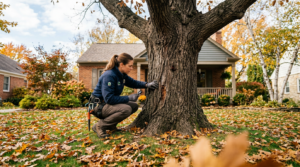
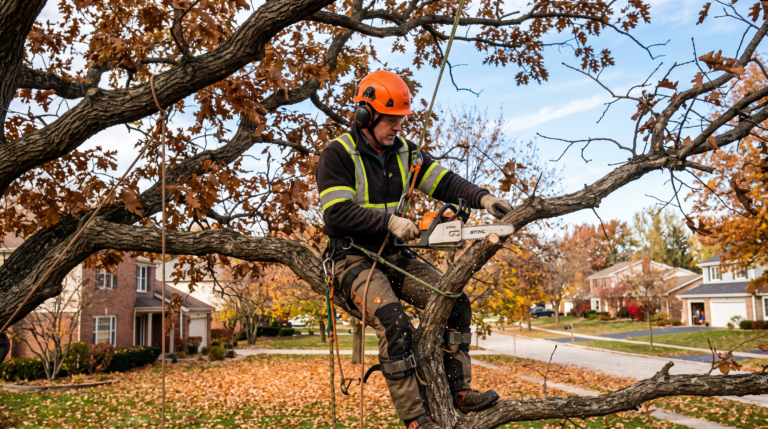
Proper arboricultural maintenance is far more than random branch cutting; it involves careful anatomical evaluation guided by the International Society of Arboriculture standards. Skilled arborists assess branch bark ridges, collar integrity, and load distribution across the entire crown.
Crown Thinning and Deadwood Removal
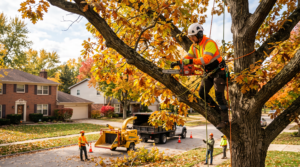
Crown thinning focuses on selectively removing weak, dying, or rubbing interior branches without altering the natural form of the tree. This technique creates clear pathways for winter gale winds to pass straight through the canopy rather than pushing against a solid wall of wood.
- Deadwood Clearance: Brittle branches lack moisture and snap cleanly under minor snow loading. Eliminating them removes immediate drop hazards.
- Canopy Balancing: Heavy asymmetric limb growth places uneven torque on the main trunk, increasing the risk of uprooting during ground-softening thaw cycles.
- Structural Pruning of Young Trees: Establishing a strong central leader early prevents weak co-dominant stems from splitting under ice loads decades later.
Dormancy Benefits for Tree Health
Pruning when deciduous trees enter dormancy offers distinct biological advantages. Because physiological activity slows down, the tree does not expend vital energy attempting to produce new foliage during freezing weather. Additionally, fungal spores and wood-boring pests remain inactive, virtually eliminating the risk of spreading infections such as oak wilt or Dutch elm disease.
Common Risks of Neglecting Pre-Winter Canopy Maintenance
Homeowners who delay seasonal tree care often face compounding hazards once snow blankets the ground. Emergency removals during blizzard conditions carry higher risks and severe logistical complications.
| Hazard Type | Root Cause | Winter Consequence |
|---|---|---|
| Included Bark Forks | V-shaped unions with weak internal attachment | Major trunk split from ice weight |
| Overhanging Boughs | Canopy growth extending within 10 feet of buildings | Gutter tearing, shingle damage, roof penetration |
| Interior Deadwood | Natural branch senescence and fungal decay | Falling limbs striking vehicles and walkways |
Tailored Solutions for Rockford Properties
Every landscape presents unique environmental challenges based on topography, age of tree stock, and proximity to municipal infrastructure. A tailored property assessment identifies the exact level of intervention required:
- Suburban Residential Lots: High-density neighborhoods require precision clearance around service lines, garages, and neighboring fence lines.
- Historic & Mature Properties: Older specimens with thick trunks require specialized canopy weight reduction and non-invasive crown cabling.
- Commercial Grounds & Parking Facilities: Broad parking lot perimeters must be systematically cleared of low-hanging limbs to avoid fleet damage and ensure clear sightlines for snow removal machinery.
- Complete Site Remediation: When a hazardous tree is beyond saving through trimming, coordinated tree removal and precision stump grinding clear the land for safe future planting.
Why Rockford Property Owners Rely on Flying W Tree Service
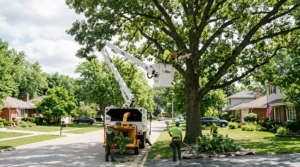
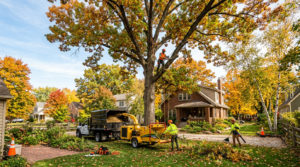
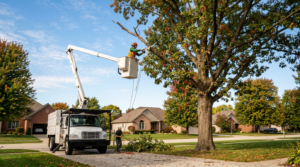
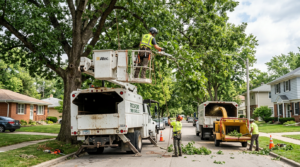
With more than 50 years of trusted local service across Rockford, IL, Flying W Tree Service provides unmatched arboricultural expertise and high-capacity equipment. Our certified team operates 75-foot bucket trucks, commercial log loaders, and advanced stump grinders to manage the toughest tree challenges safely and efficiently.
Whether your property requires precision seasonal canopy reduction, large-scale tree removal, or fast storm damage clean-up, we prioritize safety, thorough debris clearing, and honest pricing. Explore our full suite of professional tree services or request a fast, no-obligation estimate before severe winter storms arrive.
Frequently Asked Questions
How much clearance should tree branches have above my roof?
Arborists recommend maintaining a minimum clearance of 8 to 10 feet between major tree limbs and your roofline. This prevents branches from rubbing against shingles, protects gutters from leaf dams, and eliminates roof damage if heavy snow weighs limbs down.
Can tree trimming be performed during freezing winter months?
Yes. Dormant winter pruning is one of the safest and most effective times to trim large deciduous trees. Frozen ground protects your turf from heavy equipment impact, and bare branches allow arborists to view the complete framework of the canopy with total clarity.
What should I do if a tree branch is touching power lines?
Never attempt to prune branches near electrical utilities yourself. Contact your local power utility or a qualified, insured tree care company with certified line-clearance equipment immediately.
How often should mature trees in Rockford be professionally pruned?
Most mature shade trees benefit from comprehensive health inspections and maintenance pruning every 3 to 5 years. Fast-growing or storm-prone species may require light safety pruning every 2 years to maintain proper balance.
Protect Your Landscape with Flying W Tree Service
Preparing your property for Illinois winter storms starts with professional canopy evaluation and targeted tree trimming. Flying W Tree Service brings five decades of hands-on experience, licensed safety protocols, and commercial-grade machinery to every project in Rockford, IL. Contact our dedicated team today to schedule your free tree service estimate and keep your property secure all season long.